
Quantifying youth dog-facilitated physical activity and potential associated factors
Article Sidebar
Main Article Content
Abstract
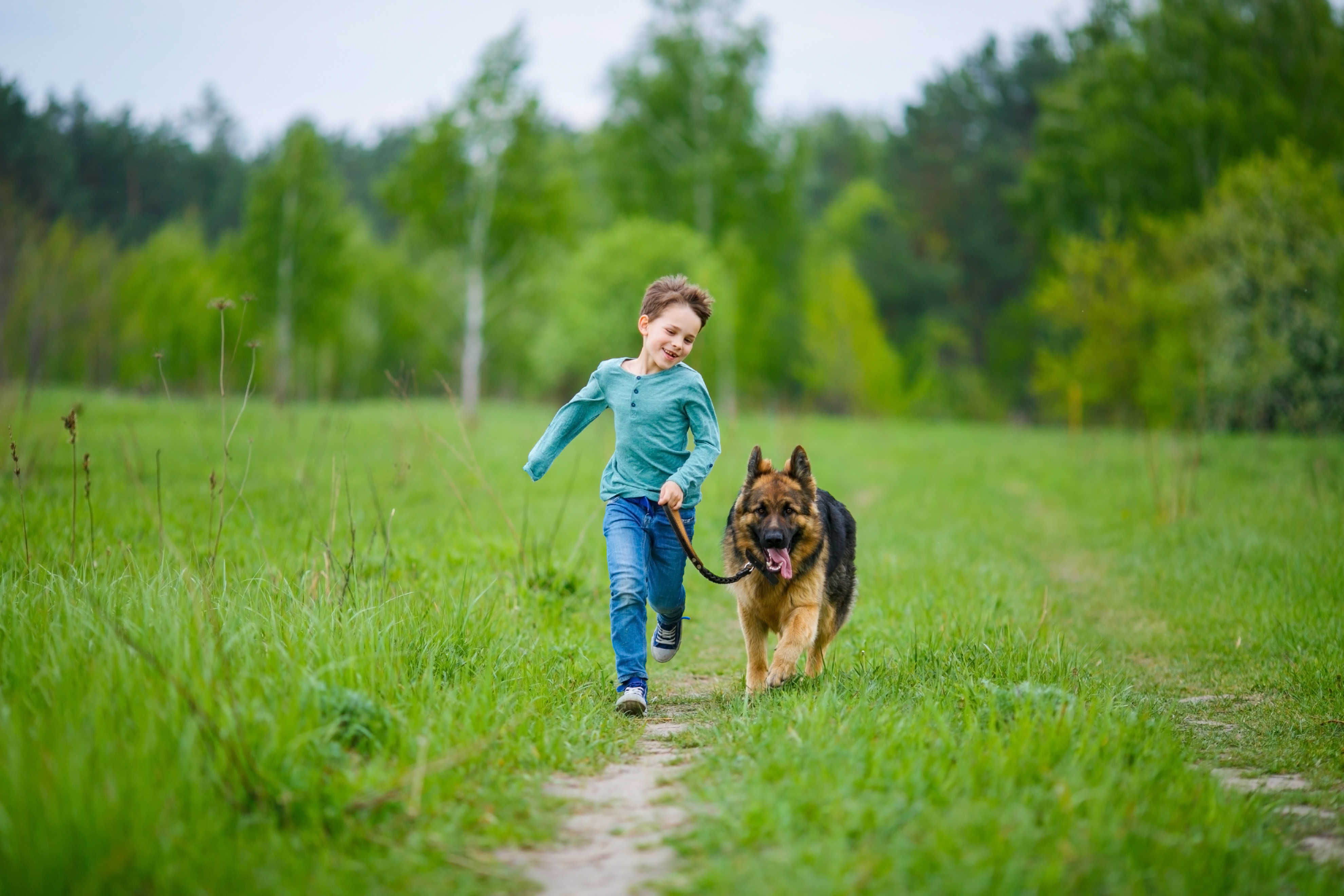
Currently, two in three American youth do not meet the National Physical Activity (PA) Guidelines. Dog-facilitated PA (e.g., dog walking and active play) is a promising target to promote youth PA. The study purposes were to 1) determine the quantity and intensity of dog-facilitated PA, 2) compare accelerometry and parent-report measurement methods, and 3) evaluate whether child-dog bond strength, child sex, yard size and/or dog size were associated with dog-facilitated youth PA. Children and their dog(s) wore ActiGraph accelerometers with a Bluetooth proximity feature for 7 days. Accelerometers are wearable devices that measure acceleration and are commonly used to estimate the intensity, duration, and patterns of physical activity. Additionally, parents logged child PA with the dog(s). Minutes of dog-facilitated moderate-to-vigorous PA (MVPA) were calculated from both measures. Twenty three children (mean age = 8.5 ± 1.4 years; 91.3% White) participated. Dog-facilitated mean daily minutes of MVPA assessed by accelerometer and parent-report were 16.6 (10.9) and 7.3 (7.4), respectively. There were no statistically significant differences between any of the associated factors and mean daily dog-facilitated MVPA. This study found nearly a quarter of average daily MVPA came from dog-facilitated PA. This is a potentially meaningful contribution to overall PA. Research in this field can be used to inform PA intervention development. Parent-reported PA vastly underestimated dog-facilitated PA when compared to device based measurement, and therefore future studies should consider using accelerometry to quantify dog-facilitated PA. Future studies should recruit larger, more diverse samples.
Downloads
Article Details

This work is licensed under a Creative Commons Attribution-NonCommercial-ShareAlike 4.0 International License.
Authors will be the copyright proprietor of their own work although they have accepted to use a creative common license, specifically CC-Attribution-NonComercial-ShareAlike_4.0