
"We need her young, we need her hot". On the marginalization exercised by the film industry towards actresses in maturity: an approach through the treatment of sound in "The Substance" (Coralie Fargeat, 2024)
Article Sidebar
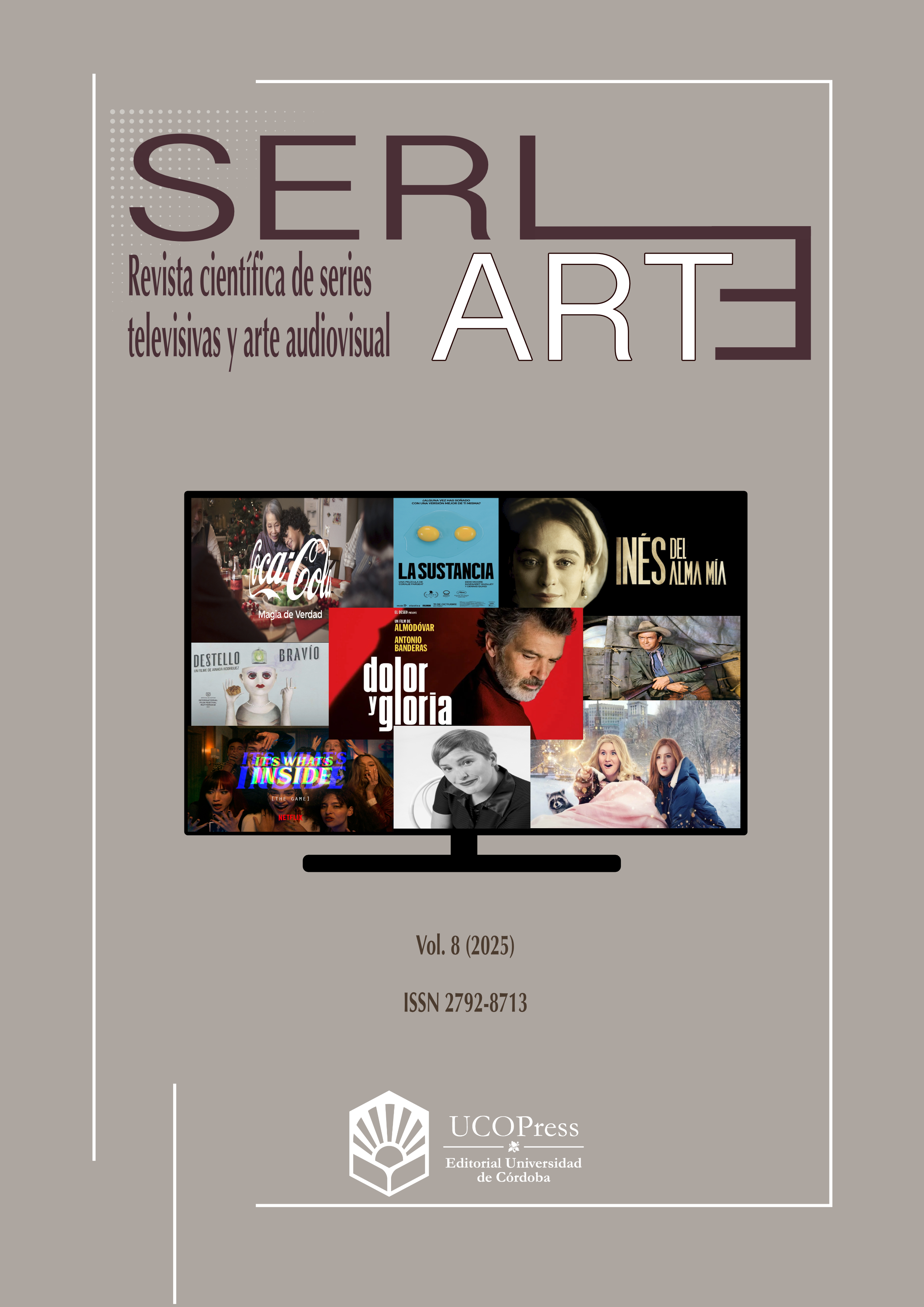
Main Article Content
Abstract
The Hollywood film industry, like other industries related to the imaginary of big stars, such as the music industry, tends to discard actresses when they reach maturity, relegating them to secondary roles and significantly reducing their job offers. Parisian director Coralie Fargeat fiercely denounces this critical situation perpetuated over time in her latest feature film: The Substance (2024). The film, which could be framed in the horror and body horror genre, has been deeply acclaimed by critics, winning the award for best screenplay at the Cannes Film Festival, as well as five nominations for the 97th Academy Awards, among others. In this article, we will analyze the use and treatment of sound design in a selection of scenes to highlight, highlight and emphasize all the internal problems that the protagonist, actress Elizabeth Sparkle (Demi Moore), goes through in her search for the eternal youth that the industry unceremoniously demands of her.
Downloads
Publication Facts
Reviewer profiles N/A
Author statements
Indexed in
- Editor & editorial board
- profiles
- Publisher
- Ucopress. Cordoba University Press

To learn about these publication facts, click 
PF is maintained by the Public Knowledge Project
Article Details

This work is licensed under a Creative Commons Attribution-NonCommercial-NoDerivatives 4.0 International License.




References
ARREDONDO, Herminia y GARCÍA GALLARDO, Francisco José (1998), «Los sonidos del cine», Comunicar: Revista Científica de Comunicación y Educación, vol. 11, pp. 101-105. DOI: https://doi.org/10.3916/C11-1998-16
CAPP, Rose (2025), «The Substance: When look can kill», The Gerontologist, enero, p. 3. DOI: https://doi.org/10.1093/geront/gnaf005
CELEDÓN BÓRQUEZ, Gustavo (2017), «Filosofía y escucha: el caso del sonido en el cine», Poliética, vol. 5, nº 2, pp. 6-25. DOI: https://doi.org/10.37127/25393995.27
CHION, Michel (1993), La audiovisión. Introducción a un análisis conjunto de la imagen y el sonido, Barcelona: Paidós Ibérica.
EC, R, «Meryl Streep: “A los 40 solo me ofrecían hacer de bruja”», El Comercio. En: <https://elcomercio.pe/luces/cine/meryl-streep-40-me-ofrecian-bruja-312616-noticia/#google_vignette> (fecha de consulta: 1-02-2025)
HERRERA LANDEROS, Sara (2020), «La fuerza del sonido en el cine», Revista Iberoamericana de comunicación, vol. 38, pp. 131-147
MARÍN REYES, María Verónica (2010), Análisis de la evolución y fortalecimiento del audio en el cine mudo y en el cine actual como elemento creativo y narrativo del género del terror del mundo occidental, Quito: Universidad de las Américas.
MOLINARI, Milagros (2024), «El cuerpo abyecto: menopausia y maternidad en The Substance», Revista estudiantil sobre discursividad social, vol.1, nº 1, pp. 171-175.
SÁNCHEZ, Andrés, «Maggie Gyllenhaal, de 37 años, demasiado mayor para Hollywood», Vanidad. En: <https://vanidad.es/maggie-gyllenhaal-de-37-anos-demasiado-mayor-para-hollywood/> (fecha de consulta: 2-02-2025)
SAPRÓ BALBONI, Marcos (2009), Acústicas del miedo. Lo siniestro en el cine fantástico y de terror a través de la banda sonora, Valencia: Universidad de Valencia.